EV2 Static Plate Load Test | Verify Earthwork Stability & Compaction Quality | KNACK
As infrastructure projects become larger and more technically demanding, the need for accurate ground performance evaluation has never been greater. High-speed rail corridors, industrial logistics parks, container terminals, airport pavements, expressways, and slab-on-grade warehouses all rely on one critical factor: the long-term stability of the supporting subgrade.
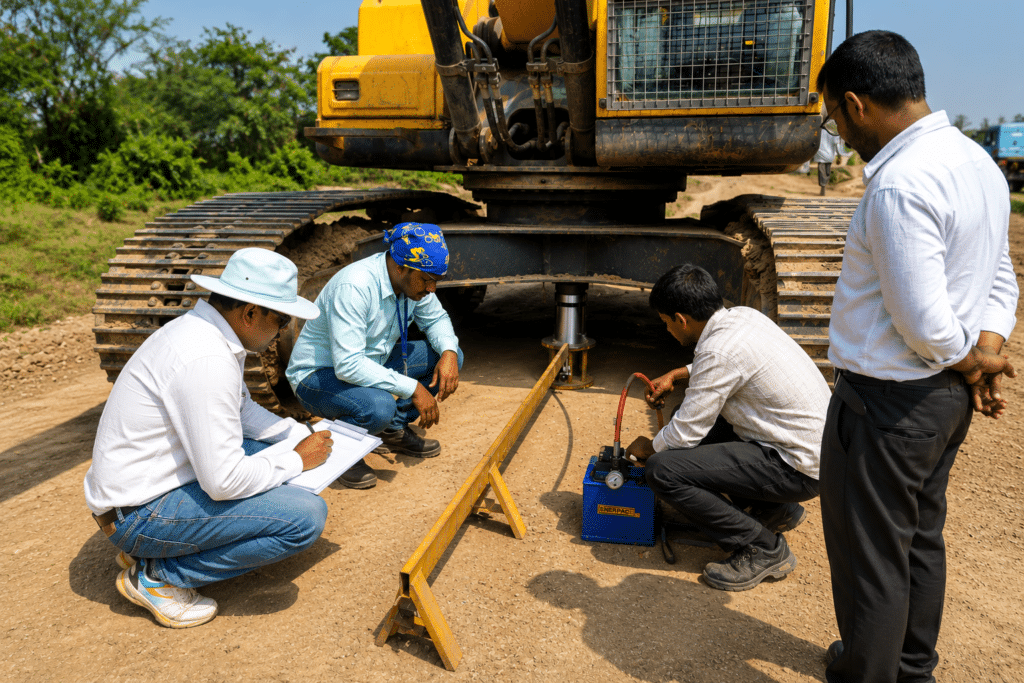
While conventional compaction assessments such as dry density and moisture-density relationships remain important, they do not always provide a complete understanding of how a soil layer will behave under actual service loads. This is where the EV2 static plate load test plays a vital role. By directly measuring soil deformation under controlled loading conditions, engineers gain valuable information about the long-term performance of earthwork and pavement systems.
For project management consultants, developers, structural designers, and contractors, the EV2 static plate load test has become one of the most reliable methods for validating subgrade performance before construction progresses to the next stage.
Understanding the EV2 Static Plate Load Test
The EV2 static plate load test is conducted in accordance with DIN 18134, a recognised international standard for evaluating the deformation characteristics of soils and compacted layers.
Unlike traditional testing methods that focus solely on density measurements, this procedure assesses how the ground responds to actual loading. A rigid steel plate is positioned on the prepared surface, and controlled loads are applied through a hydraulic system. Settlement readings are recorded throughout the loading process, providing direct information on soil stiffness and deformation behaviour.
What makes the EV2 static plate load test particularly valuable is its cyclic loading methodology. The test involves loading, unloading, and reloading the soil, enabling engineers to distinguish between permanent settlement and recoverable elastic deformation.
Why Deformation Modulus Matters
Modern infrastructure design increasingly relies on the concept of deformation modulus DIN 18134 rather than simply evaluating density values.
The deformation modulus represents the relationship between applied stress and resulting deformation. In practical terms, it indicates how stiff a compacted layer is when subjected to structural loads.
A higher deformation modulus generally indicates better load distribution and reduced susceptibility to excessive settlement. This information is particularly important for projects involving:
- Expressways and highways
- High-speed rail infrastructure
- Industrial yards
- Container terminals
- Airport pavements
- Logistics parks
- Slab-on-grade warehouse developments
By measuring the deformation modulus DIN 18134, engineers can verify that the prepared ground meets design requirements before they install expensive structural layers.
EV1 and EV2: Understanding the Difference
One of the key benefits of the EV2 static plate load test is its ability to generate two important engineering parameters.
EV1 – First Loading Deformation Modulus
EV1 represents the deformation modulus obtained during the first loading cycle. It reflects the initial condition of the soil and captures settlement associated with particle rearrangement, closure of air voids, and early-stage compaction effects.
This value provides engineers with an understanding of the existing bearing condition of the tested layer.
EV2 – Second Loading Deformation Modulus
EV2 is determined during the second loading cycle after the soil has already experienced initial compression.
Because the material has undergone prior loading, EV2 primarily measures the repeatable elastic behaviour of the soil. This parameter is often considered more representative of long-term field performance and is a critical output of the EV2 static plate load test.
The Importance of the EV2/EV1 Ratio
In addition to individual modulus values, engineers closely examine the EV2/EV1 ratio.
This ratio serves as a direct indicator of compaction quality and layer uniformity. Excessively high ratios may suggest inadequate compaction or structural instability within the tested layer. Conversely, values within specified limits indicate that the earthwork has achieved the required level of performance.
For quality-conscious project teams, the EV2/EV1 ratio provides an objective basis for acceptance or corrective action before construction progresses.
Road Subgrade Testing Mumbai: Supporting Infrastructure Reliability
The growing demand for road subgrade testing in Mumbai reflects the increasing emphasis on quality assurance across infrastructure and transportation projects.
Subgrade deficiencies can result in pavement cracking, rutting, differential settlement, and costly maintenance interventions. Identifying these issues during construction is significantly more economical than addressing them after project completion.
Through professional road subgrade testing in Mumbai, project stakeholders obtain measurable data regarding load-bearing capacity, deformation characteristics, and compaction effectiveness. These results support informed engineering decisions and reduce long-term project risks.
The Value of Independent Third-Party Verification
As infrastructure projects become more complex, independent testing has become a cornerstone of quality control programmes.
As a trusted third-party testing laboratory in Mumbai, KNACK ENGINEERING SERVICES PRIVATE LIMITED provides objective field validation for contractors, developers, consultants, and government agencies. Independent verification ensures that testing results remain unbiased and fully aligned with project specifications and applicable standards.
This approach helps eliminate disputes, supports regulatory compliance, and enhances confidence in earthwork acceptance decisions.
Earthwork Compaction Validation for Long-Term Performance
Proper earthwork compaction validation is essential for achieving durable pavement and foundation systems. Even minor deficiencies in compaction can lead to settlement, structural distress, and reduced service life.
The EV2 static plate load test is a direct and reliable way to confirm that compacted layers have the stiffness and deformation characteristics required by design engineers. Unlike indirect density-based assessments, this test evaluates actual load response, making it one of the most valuable tools in modern geotechnical quality assurance.
Frequently Asked Questions
What is an EV2 static plate load test?
The EV2 static plate load test evaluates the deformation behaviour and stiffness of compacted soil and subgrade layers under cyclic loading conditions.
Which standard governs the EV2 static plate load test?
The test is performed according to DIN 18134, an internationally recognised standard for determining soil deformation modulus.
What is the difference between EV1 and EV2?
EV1 represents the deformation modulus during the first loading cycle, while EV2 measures the deformation modulus during the second loading cycle after initial settlement effects have been reduced.
Why Choose KNACK ENGINEERING SERVICES PRIVATE LIMITED
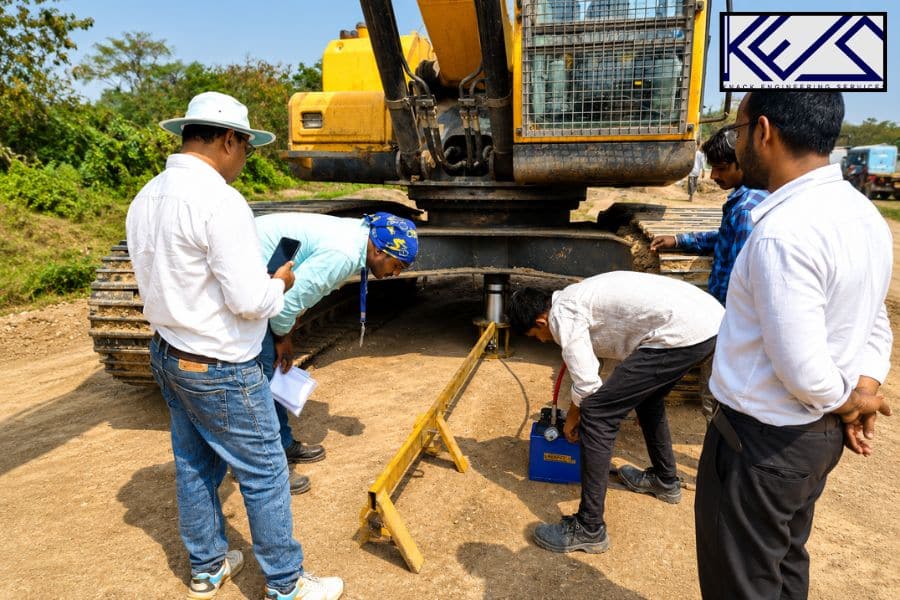
KNACK ENGINEERING SERVICES PRIVATE LIMITED provides specialised field testing services for major infrastructure, transportation, industrial, and commercial developments. Our experienced engineering teams perform the EV2 static plate load test according to DIN 18134, which provides accurate deformation modulus evaluations and independent verification of subgrade performance.
This parameter is officially verified as follows:
NABL Certificate Number TC-6828 – Mumbai Head Office and Field Divisions
NABL Certificate Number TC-15250 – Taloja Branch Facility
KNACK ENGINEERING SERVICES PRIVATE LIMITED combines technical expertise, accredited testing capabilities, and independent third-party validation to help project stakeholders reduce settlement risks, improve pavement performance, and ensure long-term infrastructure durability.
Image Reference: Freepik
Disclaimer: All trademarks, logos, and brand names are the property of their respective owners. All company, product, and service names used in this website are for identification purposes only. Use of these names, trademarks, and brands does not imply endorsement.