
Lateral Pile Load Test | Verify Horizontal Load Resistance | KNACK
Modern buildings are subjected to far more than vertical loads. High-rise buildings are exposed to forces due to wind , bridges are exposed to lateral stresses due to traffic , marine structures are exposed to wave action , and retaining systems are exposed to continuous earth pressures . These forces create substantial horizontal loads that bear directly on foundation systems. Engineers will have to check the behaviour of piles in such cases to be sure of long-term stability.
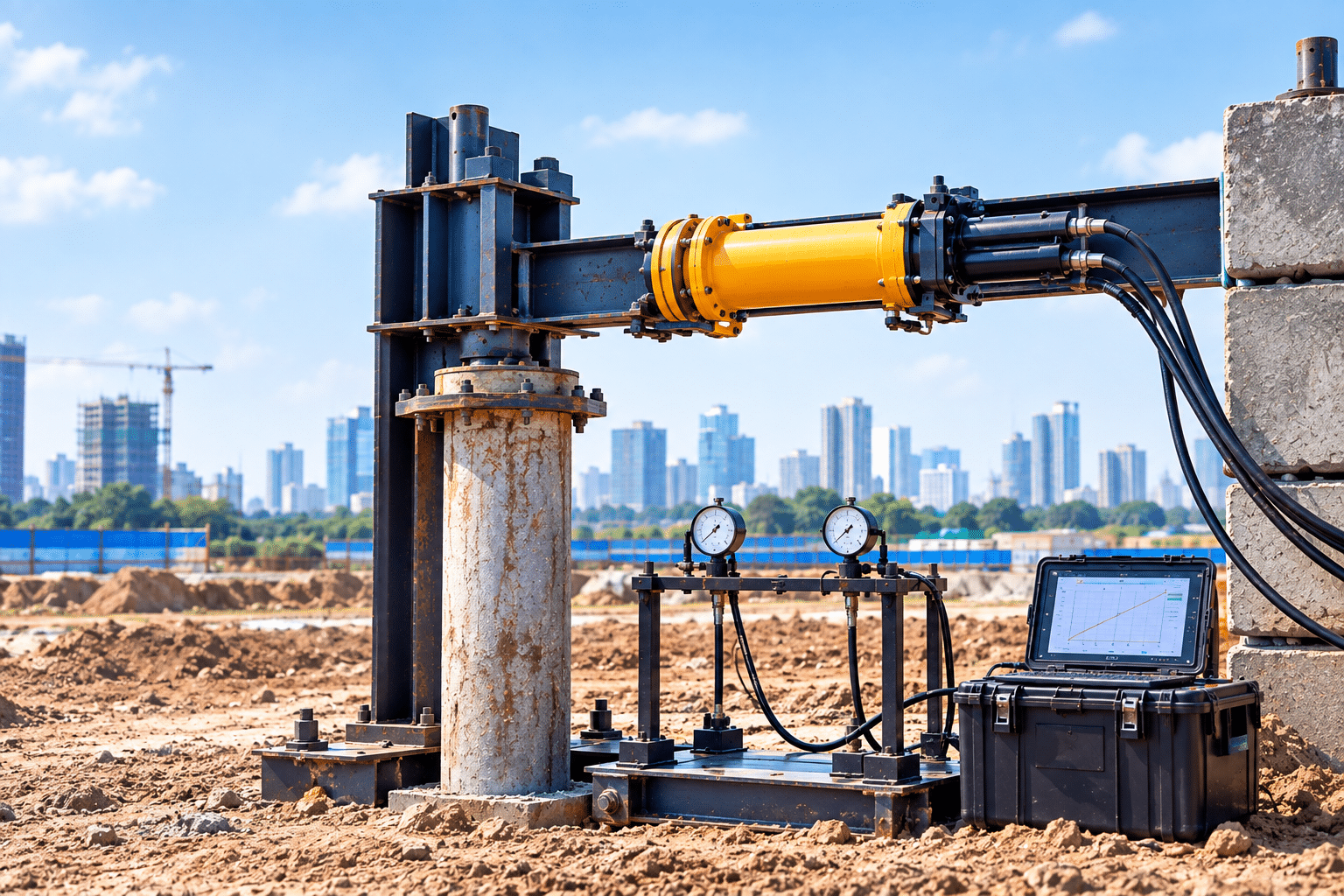
A lateral pile load test provides the most reliable field-based method for evaluating a pile’s ability to resist horizontal forces. Conducted under controlled conditions, this test measures the pile’s response to lateral loading and helps validate design assumptions before a structure is placed into service.
Why Horizontal Load Validation Matters
While vertical load capacity is often the primary focus during foundation design, horizontal forces can significantly influence structural performance. Excessive lateral movement may lead to:
- Structural tilting
- Differential displacement
- Serviceability issues
- Excessive stresses within the pile
- Damage to connected structural elements
For critical infrastructure projects, horizontal shear force validation is essential to confirm that the foundation can safely transfer lateral loads into the surrounding soil without compromising stability.
Understanding the Lateral Pile Load Test
The IS 2911 lateral test is performed to determine the horizontal load-carrying capacity of a pile and evaluate its deflection characteristics under increasing lateral forces.
During the testing a hydraulic jack is put in a horizontal position between two test piles or against a specially designed reaction system. The load is applied gradually and the displacements are continuously measured by highly sensitive dial gauges or digital monitoring equipment.
The resulting load-deflection curve allows engineers to assess:
- Pile stiffness
- Deflection behaviour
- Soil-pile interaction
- Lateral resistance characteristics
- Ultimate lateral pile capacity
Unlike theoretical calculations, the test provides actual field performance data under site-specific conditions.
Measuring Lateral Deflection Accurately
One of the most important outcomes of a lateral deflection pile test is understanding how much movement occurs under a given horizontal load.
Lateral performance is greatly affected by small changes in soil conditions. Accurate pile-head displacement monitoring allows engineers to determine if the foundation installed meets the project’s requirements and design expectations.
Accurate deflection measurements also help structural consultants optimise foundation designs whilst maintaining safety margins.
Applications Across Infrastructure Projects
Lateral pile load testing is commonly performed on projects where horizontal forces play a significant role in structural behaviour, including:
- High-rise buildings
- Coastal infrastructure
- Marine jetties and ports
- Bridge foundations
- Metro rail systems
- Retaining wall foundations
- Industrial facilities
- Transmission tower foundations
For such projects, validating lateral pile capacity is a critical component of foundation quality assurance.
The Role of IS 2911 (Part 4)
The testing methodology follows the requirements outlined in IS 2911 (Part 4), which establishes standard procedures for pile load testing in India.
The standard defines:
- Test setup requirements
- Load application procedures
- Measurement methods
- Acceptance criteria
- Reporting standards
Compliance with the IS 2911 lateral test framework ensures consistency, technical reliability, and industry-recognised results that can be confidently used by developers, consultants, and project management teams.
Importance of Independent Field Verification
Design calculations should never be the sole measure of the foundation’s performance. Field verification directly shows the behaviour of a pile under true loading conditions and verifies if construction quality is consistent with engineering assumptions.
Independent testing can help identify potential problems before they impact structural performance, reducing long-term project risks and increasing confidence in foundation systems.
Frequently Asked Questions
What is a lateral pile load test?
A lateral pile load test evaluates a pile’s ability to resist horizontal forces by measuring displacement under controlled lateral loading conditions.
Why is horizontal shear force validation important?
It helps confirm that the foundation can safely withstand wind loads, seismic forces, earth pressures, and other lateral actions without excessive movement.
What is measured during a lateral deflection pile test?
Engineers measure the horizontal displacement of the pile head at different load increments to determine stiffness and lateral load capacity.
Final Buildup – Why Choose KNACK ENGINEERING SERVICES PRIVATE LIMITED?
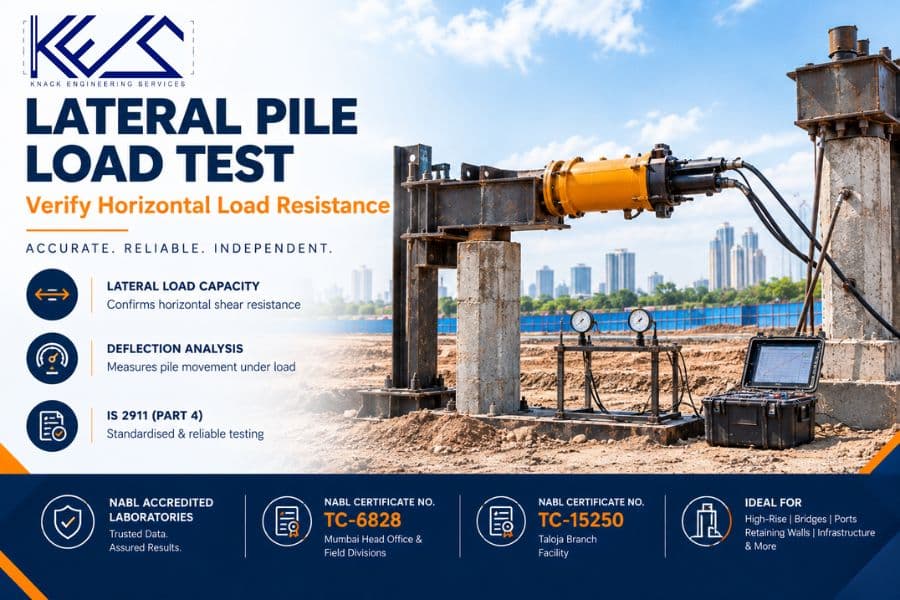
As an independent third-party testing partner, KNACK ENGINEERING SERVICES PRIVATE LIMITED delivers specialised foundation verification services for major infrastructure and construction projects.
Our field teams use calibrated hydraulic loading systems, precision displacement monitoring instruments and industry approved testing procedures to provide accurate and objective assessments of pile behaviour.
Our lateral pile testing capabilities are supported through:
- NABL Certificate Number TC-6828 – Mumbai Head Office and Field Divisions
- NABL Certificate Number TC-15250 – Taloja Branch Facility
Through professional infrastructure field testing Mumbai services, detailed horizontal shear force validation, and comprehensive assessment of lateral pile capacity, KNACK ENGINEERING SERVICES PRIVATE LIMITED helps developers, PMCs, and structural consultants build safer, more reliable foundation systems for demanding projects.
Image Reference: Magnific
Disclaimer: All trademarks, logos, and brand names are the property of their respective owners. All company, product, and service names used on this website are for identification purposes only. Use of these names, trademarks, and brands does not imply endorsement.