
Concrete Temperature Monitoring | Prevent Thermal Cracking | KNACK
In mass-concrete work the problem is in the large volumes of concrete in which the heat of hydration of the cement may become trapped in the mass. When the temperature of the concrete is much higher than the temperature of the surface, thermal stresses may develop and the likelihood of cracking increases.
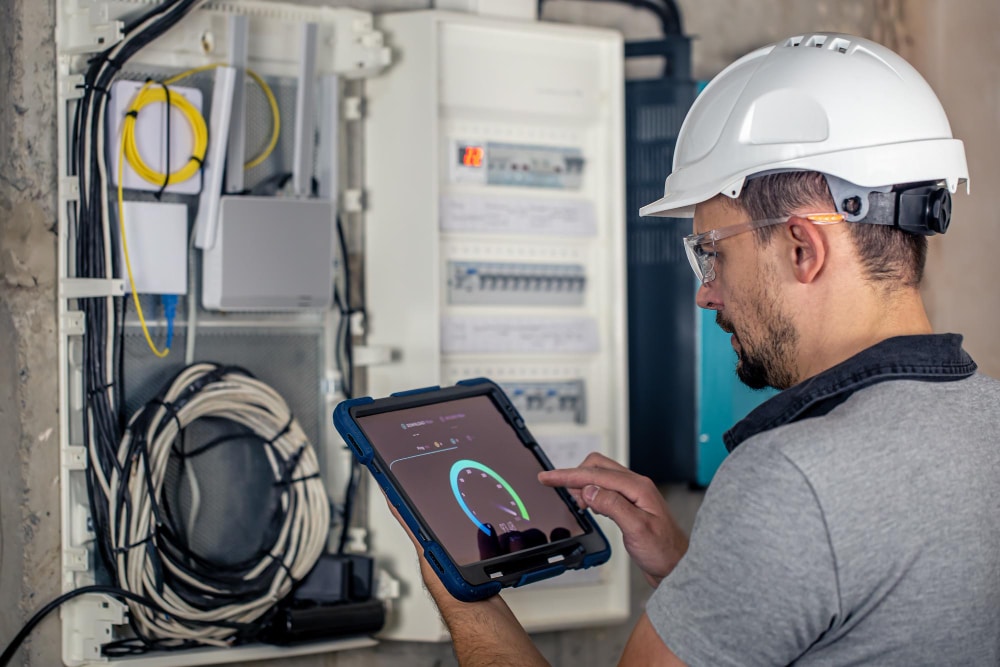
That is why Concrete Temperature Monitoring has become an important part of quality control for foundations, pile caps, bridge structures, dams, industrial facilities and other large concrete elements.
Compared with traditional testing methods that only focus on concrete strength, temperature monitoring provides continuous insight into the thermal behavior of concrete in the critical early age period.
1. Prevent Thermal Cracking
One of the most important functions of Concrete Temperature Monitoring is the detection of conditions that may contribute to thermal cracking.
Hydration of cement produces heat. In mass concrete this heat may be generated in the core while the outer surface cools more rapidly. The large temperature differential can impose tensile stresses on Young Concrete .
The constant monitoring allows the project teams to see these temperature differences and take appropriate control measures when necessary.
2. Improve Concrete Durability
Cracks can provide pathways for water, chlorides and other potentially harmful substances to enter concrete. Over time, this can contribute to reinforcement corrosion and other durability problems.
By monitoring temperature behaviour during curing, construction teams can take proactive measures to reduce temperature-related cracking and support the long-term durability of the structure.
3. Verify Curing Performance
Curing is important for performance of early age concrete. Inadequate curing or rapid cooling of the surface can cause temperature gradients and loss of moisture.
Engineers can use temperature data to understand how the concrete is behaving during the curing period. This can help guide decisions on curing techniques, insulation and other temperature controls.
4. Support Engineering Decisions
Construction decisions are more effective when they are supported by reliable data.
Concrete Temperature Monitoring provides information about core temperature, surface temperature, temperature differentials and cooling trends. Engineers can use this information alongside project specifications and other quality-control data to make informed decisions.
Rather than relying only on assumptions about how concrete is behaving, project teams can evaluate actual temperature conditions.
5. Reduce Repair Costs
Thermal cracking identified after construction can result in additional investigation, repair work, maintenance and project delays.
Proactive monitoring provides an opportunity to identify potentially problematic temperature conditions during the curing stage. Appropriate intervention at this stage can help reduce the likelihood of expensive remedial work later.
For major infrastructure projects, preventing problems during construction can be significantly more efficient than addressing them after completion.
6. Maintain Project Quality
Large concrete pours require careful coordination of batching, transportation, placement, compaction, curing and temperature controls.
Another layer of quality assurance is provided by temperature records, which tell us how the concrete performed as it cured.
This documented information may supplement other testing and inspection activities and assist project teams in achieving uniform construction quality.
7. Record Temperature History
Concrete temperature changes continuously during hydration and cooling. Taking only occasional measurements may not provide a complete picture of this behaviour.
Automated monitoring systems can record temperature data at defined intervals throughout the monitoring period. This creates a traceable temperature history that can be reviewed when required.
Such records can be particularly useful for project documentation, technical reviews and quality-assurance processes.
8. Improve Client Confidence
Infrastructure projects involve multiple stakeholders, including developers, consultants, contractors and project owners.
Providing reliable temperature data demonstrates that the thermal behaviour of critical concrete elements is being actively monitored.
Clear and traceable records can strengthen confidence in construction practices and provide stakeholders with greater visibility into the quality-control process.
9. Support Technical Documentation
Modern construction projects require extensive documentation. Quality records, inspection reports and test results help demonstrate that construction activities have been carried out according to applicable project requirements.
Concrete Temperature Monitoring generates useful temperature records that can become part of the project’s quality documentation.
These records can help demonstrate temperature-control measures and provide supporting evidence during technical assessments or project reviews.
10. Enhance Long-Term Structural Performance
The ultimate objective of quality control is to deliver structures that perform reliably throughout their intended service life.
Reducing the risk of early-age thermal cracking can contribute to improved durability and reduced exposure to moisture and aggressive environmental conditions.
For mass concrete structures, understanding temperature behaviour during the early curing stage is therefore an important part of supporting long-term structural performance.
Why Temperature Monitoring Complements Traditional Concrete Testing
Traditional concrete testing remains essential for assessing properties such as compressive strength. However, strength testing and temperature monitoring provide different types of information.
Cube testing can give data on the development of concrete strength and Concrete Temperature Monitoring can give data on the thermal behavior during curing.
Temperature monitoring can therefore be used as a complement to normal testing, giving project teams an understanding of what is happening within large concrete elements as hydration progresses.
This combination of quality-control measures provides a more comprehensive understanding of concrete performance.
Where Concrete Temperature Monitoring Is Important
Temperature monitoring can be particularly valuable for projects involving large concrete volumes or elements where thermal behaviour is a significant concern.
Typical applications include:
- Mass concrete foundations
- Raft foundations
- Large pile caps
- Bridge foundations
- Dams and hydraulic structures
- Industrial foundations
- Metro and infrastructure projects
- Large commercial developments
- Marine structures
The monitoring approach can be adapted according to the structural element, concrete mix, project specifications and expected thermal conditions.
How KNACK Engineering Services Supports Mass Concrete Projects
KNACK Engineering Services offers specialized Concrete Temperature Monitoring by calibrated sensors and automated data logging systems.
The service is performed under NABL Accreditation Certificate No. TC-6868 within the approved scope of accreditation.
The monitoring process provides project teams with accurate and traceable temperature information throughout the required curing period. This can help developers, consultants, EPC contractors and infrastructure project owners understand temperature behaviour and support appropriate engineering decisions.
For mass concrete projects, reliable monitoring can form an important part of a proactive quality-assurance strategy.
Frequently Asked Questions
Why is temperature monitoring important for mass concrete?
Mass concrete generates considerable heat during cement hydration. Because the heat can become trapped within large sections, temperature differences between the core and surface may develop. Monitoring helps project teams identify and manage these conditions.
Can temperature monitoring prevent concrete cracks?
Monitoring does not physically prevent cracks. However, it provides temperature data that can help engineers identify conditions associated with thermal cracking and take appropriate preventive measures.
Where are temperature sensors installed in mass concrete?
Sensor locations depend on the concrete element and monitoring plan. Sensors may be installed at core locations, near surfaces and at other selected points to measure temperature behaviour and differentials.
Final Build-up

Mass concrete requires careful management because the heat generated during hydration can create significant temperature differences between the core and surface. Without appropriate monitoring, potentially harmful thermal conditions may develop without being identified in time.
Concrete Temperature Monitoring provides real-time information that traditional cube testing alone cannot provide. From preventing thermal cracking and supporting curing decisions to maintaining documentation and improving long-term structural performance, temperature monitoring offers significant value throughout the construction process.
At KNACK Engineering Services, NABL-accredited Concrete Temperature Monitoring under Certificate No. TC-6868 helps project teams obtain accurate, reliable and traceable temperature data.
For critical mass concrete projects, monitoring temperature is not simply another testing activity—it is an important tool for proactive quality control and durable construction.
Image Reference: Magnific
Disclaimer: All trademarks, logos, and brand names are the property of their respective owners. All company, product, and service names used on this website are for identification purposes only. Use of these names, trademarks, and brands does not imply endorsement.