
High Tensile Strand Testing | Ensure Safe & Reliable Post-Tensioning Systems | KNACK
Structural steel has become the preferred construction material for modern commercial and industrial developments. From high-rise office towers and manufacturing facilities to logistics parks and warehouses, steel offers exceptional strength, design flexibility, and faster construction timelines. However, the performance of an entire structure depends on the quality and reliability of the steel components used during construction.
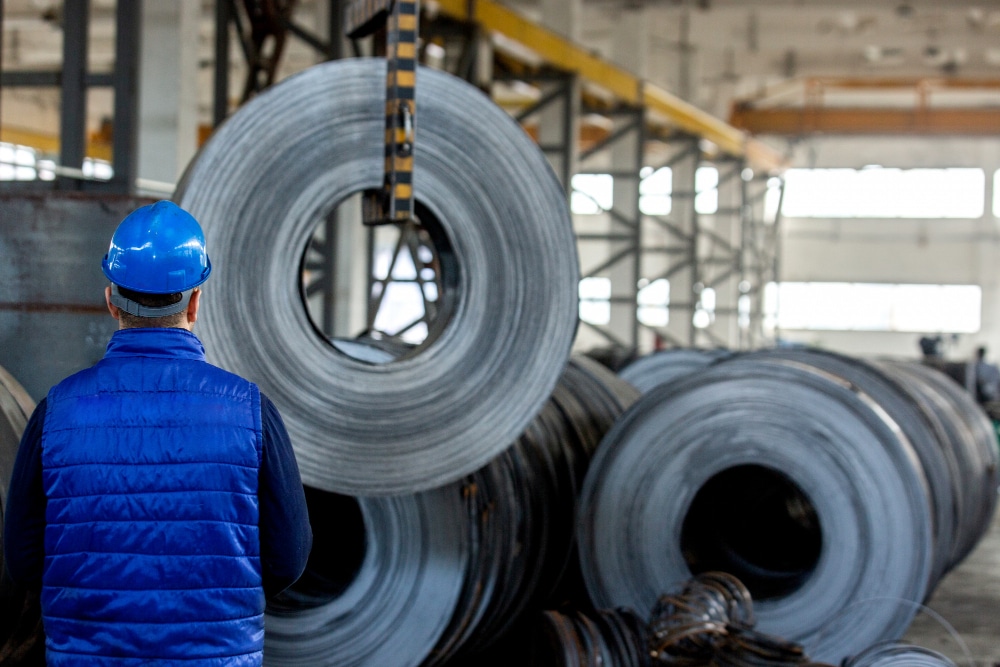
Even minor variations in mechanical properties can significantly impact structural integrity. A beam that does not meet specified strength requirements or a pipe with hidden manufacturing defects can create long-term risks for a project. This is why professional structural steel testing is an essential part of quality assurance before fabrication and installation begin.
Commercial projects must withstand a wide range of loads throughout their service life. Structural steel components must support dead loads, live loads, wind forces, vibration, and, in some cases, seismic activity. To ensure safe performance, engineers rely on precise material specifications during the design phase.
However, design calculations are only as reliable as the materials used on-site. Without proper verification, there is no guarantee that steel plates, beams, columns, channels, or pipes meet the required standards. Independent testing provides the confidence that structural elements will perform as intended under real-world conditions.
Steel products often originate from different manufacturers and production batches. Variations in raw materials, manufacturing processes, and quality controls can influence mechanical properties such as tensile strength, ductility, and yield performance.
Using untested materials may result in:
- Reduced load-bearing capacity
- Excessive deformation under stress
- Premature cracking
- Fabrication challenges
- Compliance issues during inspections
- Increased maintenance and repair costs
Material verification helps identify these concerns before fabrication begins, reducing risks and protecting project investments.
Commercial construction projects utilise a wide variety of structural steel products, including:
- Steel plates
- Chequered plates
- Structural beams
- Columns
- Channels
- Angles
- Hollow sections
- Steel tubes
- GI pipes
- Dowel bars
Each component serves a critical structural function and must satisfy specific performance requirements before being incorporated into a building or infrastructure project.
Tensile Strength and Yield Strength Testing
One of the most important evaluations performed during structural steel testing is the measurement of tensile and yield strength.
Tensile strength determines the maximum stress a material can withstand before failure, while yield strength identifies the point at which permanent deformation begins. These values are essential for confirming that steel components can safely carry design loads without structural compromise.
Testing is generally conducted in accordance with IS 1608 (Part 1) to ensure reliable and standardised results.
Percentage Elongation and Proof Stress
Strength alone is not enough to guarantee safe structural performance. Steel must also possess adequate ductility to absorb loads and distribute stresses effectively.
Percentage elongation testing measures the ability of steel to stretch before failure, while proof stress evaluation helps determine the material’s elastic behaviour under loading conditions. These properties are particularly important for structures exposed to dynamic or fluctuating loads.
Bend Testing
Fabrication processes frequently require steel sections to be bent or shaped. Bend testing evaluates the ability of a material to withstand deformation without cracking or developing surface defects.
This test can reveal hidden manufacturing imperfections that may not be visible during routine inspections. Conducted according to recognised standards such as IS 1599, bend testing plays a valuable role in quality verification.
Flattening Tests for Tubes and Pipes
Steel tubes and GI pipes often experience compressive forces during transportation, installation, and service conditions.
Flattening tests assess whether these components can withstand deformation without splitting, cracking, or losing structural integrity. This evaluation is particularly important for hollow sections and pipe-based structural systems.
Testing is commonly carried out in accordance with IS 2328 requirements.
Third-party testing provides unbiased verification of material quality and compliance. Independent laboratories use calibrated equipment, qualified personnel, and recognised testing procedures to generate reliable results that project stakeholders can trust.
For developers, consultants, contractors, and project management teams, independent testing offers several advantages:
- Improved quality assurance
- Reduced construction risks
- Compliance with project specifications
- Enhanced confidence during inspections
- Better long-term structural performance
Most importantly, it ensures that structural decisions are based on verified data rather than assumptions.
Frequently Asked Questions
What is High-Tensile Strand Testing?
High-Tensile Strand Testing evaluates the mechanical and physical properties of prestressing steel strands used in post-tensioned concrete structures.
Why is High-Tensile Strand Testing important?
It verifies that the strands can safely withstand the high stresses generated during post-tensioning operations and throughout the structure's service life.
Why is modulus of elasticity important in H.T. strands?
It helps engineers calculate strand elongation and achieve the required prestressing force during construction.
Final Build
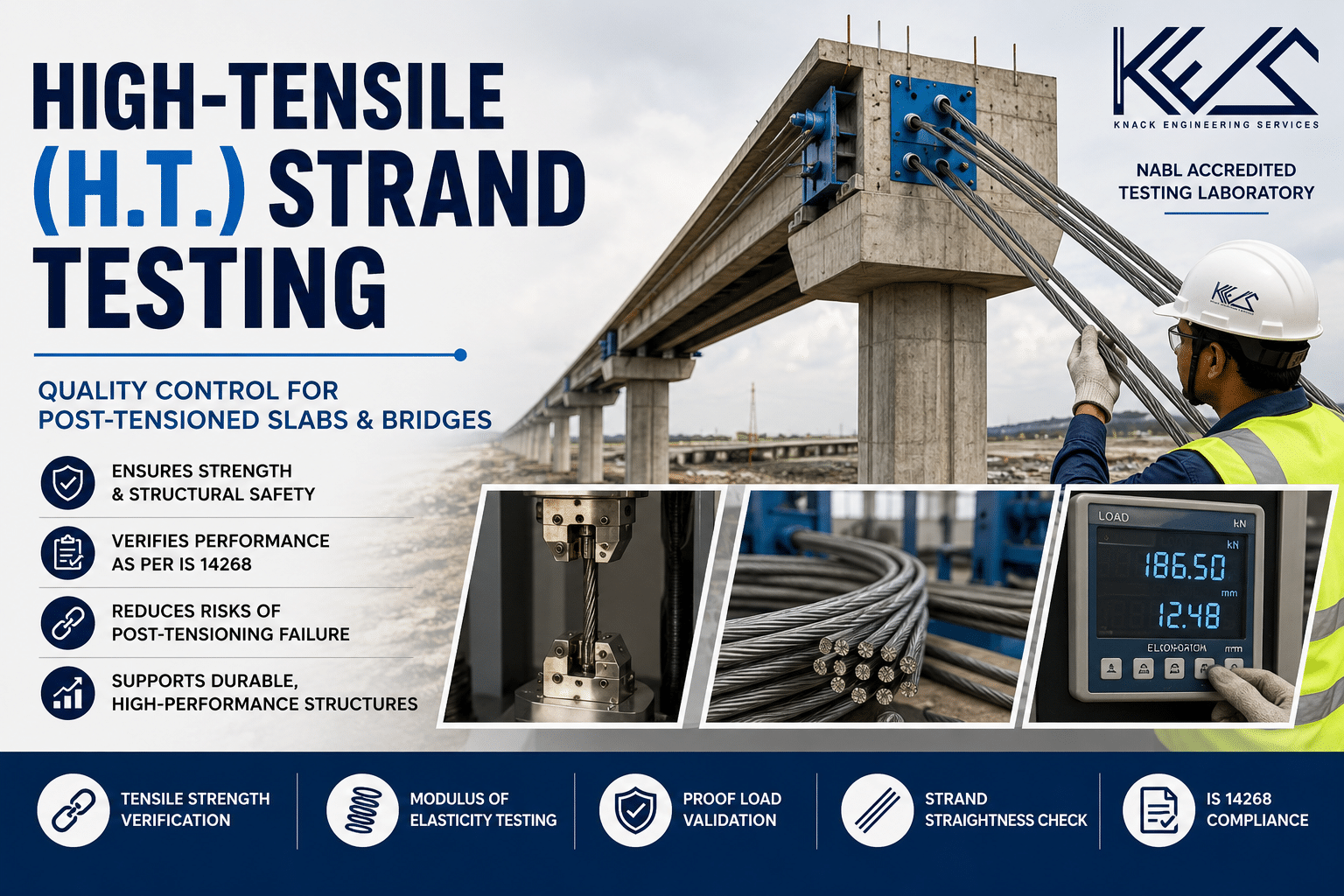
When structural reliability is a priority, professional testing becomes an essential investment. KNACK ENGINEERING SERVICES PRIVATE LIMITED provides comprehensive structural steel testing services to support commercial, industrial, and infrastructure projects.
Our laboratories perform mechanical testing on steel plates, beams, columns, GI pipes, hollow sections, and other structural components using calibrated equipment and recognised testing standards.
Testing services are supported by:
NABL Certificate Number TC-6828 – Mumbai Head Office and Field Divisions
NABL Certificate Number TC-15250 – Taloja Branch Facility
By delivering accurate, independent, and technically reliable test results, KNACK ENGINEERING SERVICES PRIVATE LIMITED helps project stakeholders ensure that structural steel materials meet required performance standards before fabrication and installation begin.
Image Reference: Magnific
Disclaimer: All trademarks, logos, and brand names are the property of their respective owners. All company, product, and service names used in this website are for identification purposes only. Use of these names, trademarks, and brands does not imply endorsement.