Structural Steel Testing for Commercial Projects | Ensure Compliance
Structural steel plays a vital role in modern commercial construction. From industrial warehouses and manufacturing facilities to office towers, shopping centres, and infrastructure projects, steel provides the strength, flexibility, and speed needed for efficient construction. Its exceptional strength-to-weight ratio makes it a preferred choice for engineers and developers seeking durable and cost-effective building solutions.

However, the performance of a commercial structure depends on more than selecting the right steel sections. Every plate, beam, column, channel, angle, hollow section, and GI pipe must meet strict quality and mechanical performance requirements before fabrication and installation. Even a minor defect in a structural component can affect load distribution, create safety concerns, and lead to costly project delays.
This is why structural steel testing is an essential part of quality assurance for commercial construction projects.
Why Structural Steel Testing Is Critical for Commercial Buildings
Throughout their service life, commercial structures experience a wide range of forces. These include dead loads from the structure itself, live loads from occupants and equipment, wind loads, seismic forces, and environmental stresses.
Structural steel members are designed to withstand these loads while maintaining stability and performance. However, manufacturing variations, material inconsistencies, and hidden defects can affect the behaviour of steel components under real-world conditions.
Without proper testing, builders may unknowingly use materials that fail to meet project specifications or applicable standards. Structural steel testing helps identify potential issues before fabrication begins, reducing the risk of failures and ensuring compliance with engineering requirements.
For developers, contractors, consultants, and project owners, independent testing provides confidence that the steel used in construction will perform as intended.
Common Structural Steel Components That Require Testing
Modern commercial projects utilise a variety of steel products, each serving a specific structural function.
These commonly include:
- Steel Plates
- Chequered Plates
- Beams
- Columns
- Channels
- Angles
- Hollow Structural Sections
- Steel Tubes
- GI Pipes
- Dowel Bars
Although these materials may appear similar, their mechanical properties can vary depending on manufacturing processes, raw material quality, and production controls. Testing verifies that each component satisfies the required standards before being incorporated into the structure.
Ultimate Tensile Strength and Yield Strength Testing
One of the most important aspects of structural steel testing is evaluating its load-bearing capability.
Ultimate Tensile Strength (UTS) measures the maximum stress a steel component can withstand before failure. This test helps determine whether the material is capable of handling the loads anticipated by structural engineers.
Yield Strength is equally important because it identifies the point at which steel begins to deform permanently. Once this limit is exceeded, the material may not return to its original shape even after the load is removed.
Testing these properties in accordance with IS 1608 (Part 1) helps verify that structural members perform according to design expectations and safety requirements.
Percentage Elongation and 0.2% Proof Stress
Strength alone is not enough for structural performance. Steel must also possess sufficient ductility to absorb and redistribute loads without sudden failure.
Percentage Elongation measures the ability of steel to stretch before breaking. Materials with adequate elongation can accommodate stress and deformation more effectively, particularly during extreme loading events such as earthquakes or heavy wind conditions.
The 0.2% Proof Stress test is used to determine the stress level at which a material experiences a specified amount of permanent deformation. This parameter is particularly useful when a clear yield point is not easily identifiable.
Together, these tests offer invaluable insight into the flexibility and resilience of structural steel components.
Bend Testing for Structural Integrity
Structural steel often undergoes bending during fabrication and construction activities. As a result, it is essential to verify that the material can withstand these forces without developing cracks or defects.
Bend testing, conducted in accordance with IS 1599, evaluates the material’s behaviour under severe bending conditions.
This test helps reveal hidden manufacturing flaws, micro-fissures, or internal weaknesses that may not be visible through routine inspection. Successfully passing a bend test indicates that the material can maintain its integrity during fabrication and service.
Flattening Test for Tubes and GI Pipes
Steel tubes and GI pipes are widely used in structural frameworks, industrial applications, utility systems, and commercial construction projects.
To ensure their reliability, these products must undergo flattening tests as specified under IS 2328.
During this test, the pipe or tube is subjected to controlled compressive forces until it is flattened. The purpose is to determine whether the material develops cracks, splits, or other signs of failure.
A successful flattening test confirms that the product possesses the required toughness and manufacturing quality to perform safely under demanding conditions.
Frequently Asked Questions
Why is structural steel testing important for commercial projects?
Structural steel testing verifies that steel components meet strength, ductility, and safety requirements before fabrication and installation.
Which structural steel components should be tested?
Common components include steel plates, beams, columns, channels, angles, hollow sections, steel tubes, GI pipes, and dowel bars.
What is Ultimate Tensile Strength (UTS) testing?
UTS testing measures the maximum stress a steel component can withstand before failure, helping verify its load-bearing capacity.
Why Third-Party NABL-Accredited Testing Matters
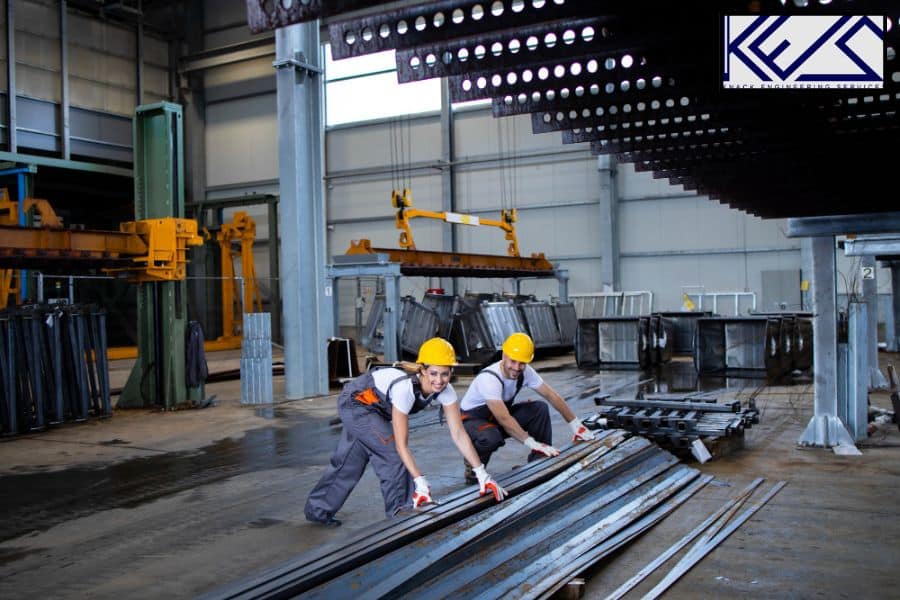
Using unverified structural steel can lead to serious risks for projects, such as compliance issues, fabrication challenges, structural distortion, and long-term performance concerns.
Third-party testing by an NABL-accredited laboratory independently verifies that materials meet recognised standards and project specifications. Accredited laboratories follow strict testing procedures, utilise calibrated equipment, and maintain robust quality management systems to ensure reliable and traceable results.
At Knack Engineering Services Pvt. Ltd., comprehensive testing services help builders, contractors, consultants, and developers validate the quality of structural steel before fabrication begins.
Mumbai Lab (Antop Hill) – NABL Accredited | Certificate No: TC-6828
Taloja Lab (Phase-1) – NABL Accredited | Certificate No: TC-15250
Before structural steel becomes part of your commercial project, ensure it has been independently tested and verified. Quality testing today can help prevent costly problems tomorrow while supporting safer, stronger, and more reliable structures.
Image Reference: Freepik
Disclaimer: All trademarks, logos, and brand names are the property of their respective owners. All company, product, and service names used in this website are for identification purposes only. Use of these names, trademarks, and brands does not imply endorsement.