
TMT Couplers, FBE & H.T. Strand Testing | Ensure Infrastructure Quality | Knack
Modern infrastructure projects demand far more than conventional construction materials. As buildings rise higher, bridges span greater distances, and transportation networks become increasingly complex, engineers must rely on advanced reinforcement systems that enhance structural efficiency, durability, and performance.
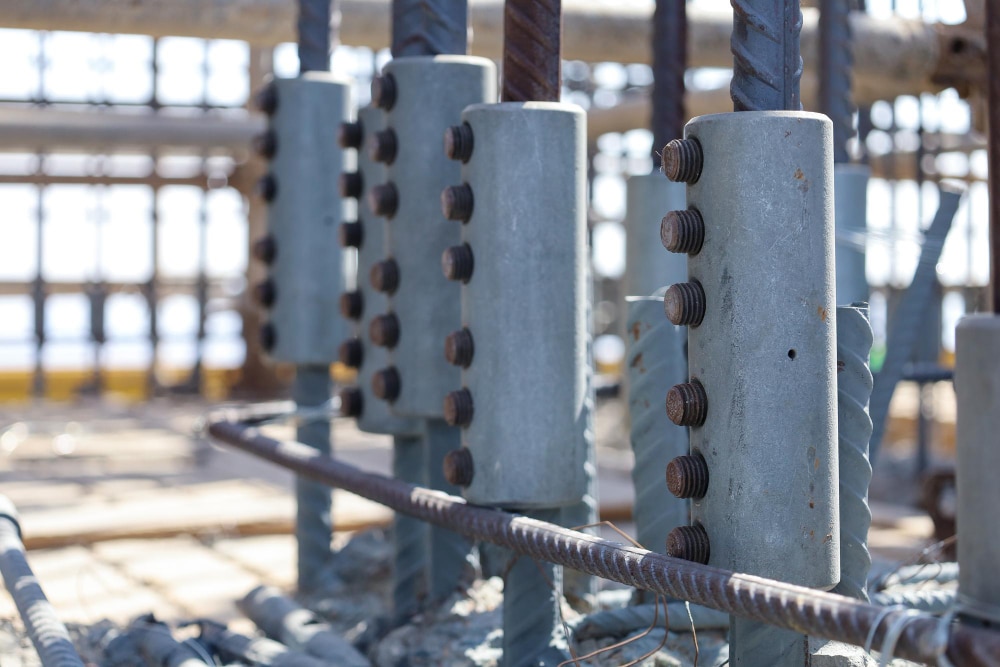
Today, components such as mechanical couplers, Fusion Bonded Epoxy (FBE) coatings, and High-Tensile (H.T.) strands play a critical role in modern construction. These materials are designed to improve load transfer, protect reinforcement from corrosion, and provide the prestressing forces required in large-scale infrastructure. However, one cannot assume their performance based on manufacturer specifications alone.
Even the strongest structure can fail if it has a defective coupler, poor coating adhesion, or a prestressing strand that does not perform well. This is why independent third-party testing is essential for quality assurance in infrastructure projects.
Why Advanced Construction Components Require Testing
Modern construction materials are engineered to solve specific challenges. Mechanical couplers reduce reinforcement congestion, FBE coatings protect steel in aggressive environments, and H.T. strands enable longer spans and stronger concrete members.
However, if these components fail to perform as intended, the consequences can be significant. Structural inefficiencies, premature deterioration, costly repairs, and reduced service life can all result from inadequate material quality.
Testing verifies that every component meets the required standards and performs consistently under real-world loading and environmental conditions. It also provides contractors, consultants, and project owners with confidence that the materials used on-site comply with project specifications.
Reinforcement Couplers: Eliminating Weak Points in Reinforcement Systems
Traditional lap splicing has been a common method for connecting reinforcement bars for decades. However, as structures become more complex and reinforcement densities increase, mechanical couplers offer a more efficient alternative.
Mechanical couplers provide continuity between reinforcement bars while reducing steel congestion and simplifying installation. They are particularly beneficial in high-rise buildings, bridges, metro projects, and heavily reinforced structural elements.
The effectiveness of a coupler depends entirely on its ability to transfer loads without failure. A poorly manufactured coupler can become the weakest point in the reinforcement system, potentially compromising structural performance.
To ensure reliability, couplers must undergo rigorous evaluation in accordance with IS 16172. Critical assessments include the following:
- Static Tensile Test
- Slip Test
- Distance of Failure Measurement
These tests confirm that the mechanical connection performs as effectively as the reinforcement bars themselves and can safely withstand the tensile forces expected during service.
Fusion Bonded Epoxy (FBE) Coatings: Protecting Structures from Corrosion
Corrosion remains one of the most significant threats to reinforced concrete structures. Coastal environments, industrial zones, marine projects, and areas with harsh groundwater expose reinforcement steel to conditions that accelerate deterioration.
Fusion Bonded Epoxy coatings provide a protective barrier that helps prevent moisture, chlorides, and other corrosive agents from reaching the steel surface. When properly applied, these coatings significantly extend the lifespan of reinforced concrete structures.
However, the effectiveness of an FBE coating depends on its quality and uniformity. Inadequate thickness, discontinuities, or poor adhesion can allow corrosion to develop beneath the coating layer, often without visible signs until significant damage has occurred.
Testing in accordance with IS 13620 helps verify coating performance through evaluations such as:
- Coating Thickness
- Continuity of Coating
- Adhesion of Coating
These assessments ensure that the protective layer performs as intended and provides long-term resistance against corrosion-related deterioration.
H.T. Strands: The Backbone of Prestressed Concrete
Prestressed concrete has transformed modern infrastructure by allowing engineers to construct longer spans, thinner sections, and more efficient structural systems.
High-Tensile strands are the primary load-carrying elements in prestressed and post-tensioned concrete structures. They are commonly used in bridges, flyovers, parking structures, industrial facilities, elevated corridors, and large-span buildings.
Because these strands carry substantial prestressing forces, even minor variations in their material properties can influence the structural behaviour. Any deviation in elasticity, strength, or elongation characteristics may affect the performance of the entire system.
To ensure compliance and reliability, H.T. strands are tested under IS 14268 and IS 1608 (Part 1) for parameters including the following:
- Breaking Load
- 0.2% Proof Load
- Modulus of Elasticity
- Elongation
- Lay Length
- Straightness of Strands
These tests verify that the strands meet the required mechanical properties and can safely deliver the prestressing forces necessary for structural performance.
Frequently Asked Questions
Why is Testing TMT Couplers important in construction projects?
Testing TMT Couplers ensures that mechanical connections between reinforcement bars can safely transfer loads and perform as intended without becoming weak points in the structure.
What standards are used for Testing TMT Couplers?
TMT couplers are commonly tested in accordance with IS 16172 to evaluate their mechanical performance and compliance with project requirements.
What tests are performed during Testing TMT Couplers?
Key tests include the Static Tensile Test, Slip Test, and Distance of Failure measurement to verify the strength and reliability of the coupler connection.
The Importance of NABL-Accredited Third-Party Testing
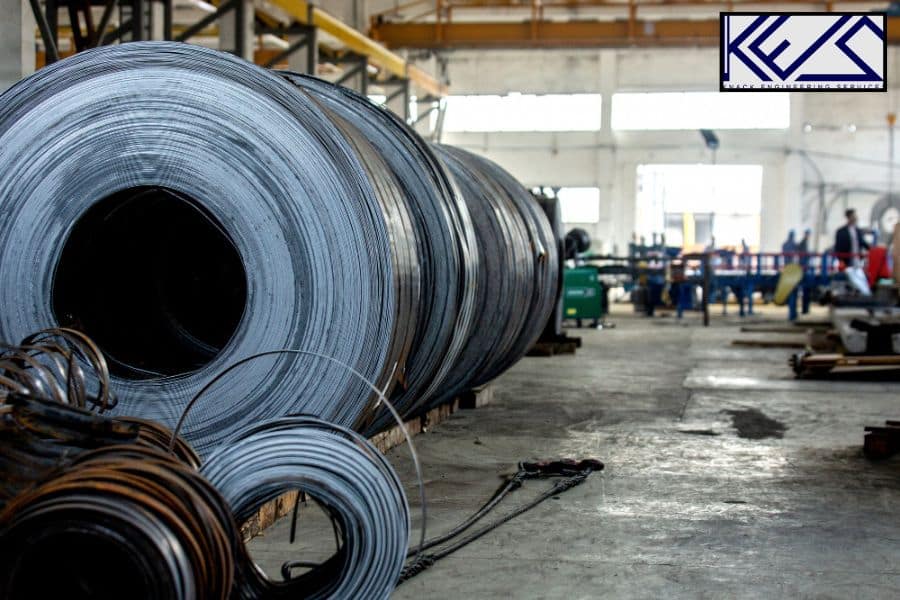
Infrastructure projects involve substantial investments and long service life expectations. Whether the project is a bridge, metro corridor, commercial tower, or public infrastructure facility, we cannot leave quality assurance to assumptions.
NABL-accredited laboratories operate under stringent quality management systems and internationally recognised testing procedures. Independent testing ensures that materials comply with applicable standards and provides traceable, reliable results.
At Knack Engineering Services Pvt. Ltd., comprehensive testing services help developers, contractors, consultants, and government agencies verify the quality of critical construction materials before they are incorporated into projects.
Our NABL-accredited laboratories comply with ISO/IEC 17025:2017 standards:
Knack Mumbai Laboratory – NABL Accredited | Certificate No: TC-6828
Knack Taloja Laboratory – NABL Accredited | Certificate No: TC-15250
As infrastructure projects become more sophisticated, every component matters. By validating couplers, protective coatings, and prestressing materials through accredited testing, project teams can improve quality, minimise risk, and build structures that are designed to perform for generations.
Image Reference: Freepik
Disclaimer: All trademarks, logos, and brand names are the property of their respective owners. All company, product, and service names used in this website are for identification purposes only. Use of these names, trademarks, and brands does not imply endorsement.